Toilet Leaking or Running Non-Stop? How to Find the Source and Fix It
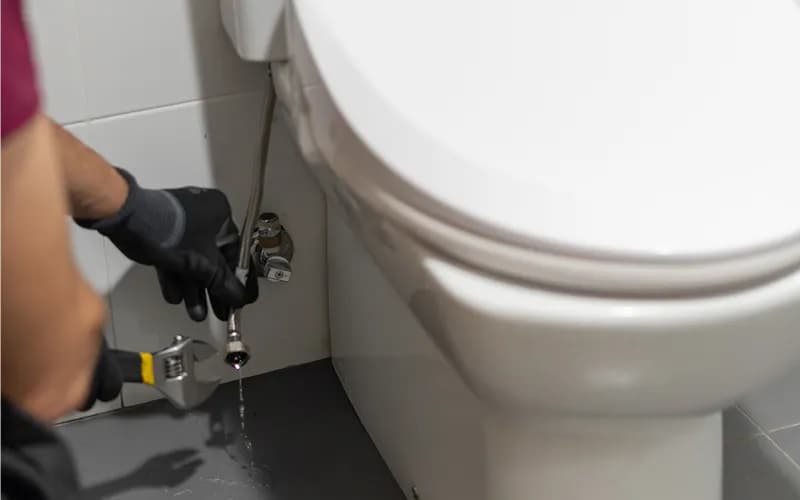
A toilet leak rarely announces itself loudly. It starts as a faint hiss from the cistern, a small damp patch at the base of the bowl, or a water bill that's higher than usual. Left alone, a running toilet can waste a surprising amount of water every day, and a leak at the base can damage flooring, waterproofing and even the ceiling of the unit below.
The key to fixing a toilet leak is finding exactly where the water is coming from. This guide shows you how to do that with a few simple tests, which fixes you can safely handle yourself, and when you need a professional.
Two Very Different Problems: "Running" vs "Leaking"
People often use these words interchangeably, but they point to different faults:
A running toilet leaks water internally, from the cistern into the bowl. You won't see water on the floor, but you'll hear refilling, see ripples in the bowl, or notice the cistern topping up on its own.
A leaking toilet leaks water externally: on the floor, behind the bowl, or from a hose or valve.
A running toilet wastes water. A leaking toilet can damage your home. Both are worth fixing quickly.
Know the Parts Before You Start
A conventional toilet has only a few parts that commonly cause leaks. Knowing their names makes it much easier to describe the problem or buy the right replacement:
Stop valve (angle valve): the small tap on the wall behind the toilet that controls water supply to the cistern.
Inlet hose: the flexible braided hose connecting the stop valve to the cistern.
Fill valve: the mechanism inside the cistern that lets water in and shuts off when the cistern is full, controlled by a float.
Flush valve and seal: the outlet at the bottom of the cistern that opens when you flush. Its rubber seal is the most common cause of a running toilet.
Pan connector or base seal: the joint between the bottom of the bowl and the waste pipe, hidden under or behind the bowl.
Wall-hung toilets have the same basic parts, but the cistern is hidden inside the wall and reached through the flush plate panel.
Test 1: The Dye Test for a Running Cistern
This simple test tells you whether the cistern is leaking into the bowl:
Remove the cistern lid (if it's a conventional exposed cistern).
Add a few drops of food colouring to the water in the cistern.
Don't flush. Wait 15–20 minutes.
Check the bowl. If coloured water has appeared, the cistern is leaking into the bowl, usually past a worn flush valve seal.
Tip: Also look at the overflow tube inside the cistern. If water is flowing into it constantly, the water level is set too high or the fill valve isn't shutting off properly.
Test 2: Dry and Watch for External Leaks
For water on the floor, start by drying everything thoroughly: the floor, the base of the bowl, the cistern, the inlet hose and the stop valve. Then place dry tissue paper at each point, flush once, and see which tissue gets wet first. Condensation can also make a toilet look like it's leaking. If the outside of the cistern is evenly covered in droplets on a humid day, it may be sweating rather than leaking.
Where the Water Appears and What It Means
Where you see water | Likely cause | DIY or professional? |
|---|---|---|
Ripples in the bowl, cistern refilling on its own | Worn flush valve seal or faulty fill valve | Often DIY with the right part |
Water constantly flowing into the overflow tube | Float set too high or fill valve not shutting off | Adjustment is often DIY |
Drips at the flexible inlet hose or stop valve | Loose connection, worn washer, or aged hose | Often DIY |
Water between the cistern and bowl | Worn cistern-to-bowl seal or loose bolts | Usually professional |
Water pooling around the base after flushing | Failed seal or pan connector between the bowl and the waste pipe | Professional: the bowl usually needs removing |
Hairline crack with water seeping | Cracked porcelain | Bowl or cistern replacement |
Stain on the ceiling of the unit below | Leak at the base, floor trap or waterproofing | Professional inspection |
Fixes You Can Safely Try Yourself
Before any work, turn off the stop valve behind the toilet (turn it clockwise) and flush to empty the cistern.
Adjust the float or water level
If water is running into the overflow tube, lower the float so the fill valve shuts off earlier. Most modern fill valves have an adjustment screw or clip. The water should stop about 2–3 cm below the top of the overflow tube.
Replace the flexible inlet hose
Braided inlet hoses age, especially in bathrooms with constant humidity. If yours is dripping at the joints, rusty, or bulging, replace it. They're inexpensive, and a burst hose can flood a bathroom quickly. Tighten fittings firmly by hand, then a gentle quarter-turn with a spanner. Overtightening can crack plastic fittings.
Replace a worn flush valve seal
On many conventional cisterns, the rubber seal at the bottom of the flush valve can be replaced without removing the cistern. Take the old seal with you when buying a replacement; sizes vary between brands.
When You Need a Professional
Some toilet leaks need tools, experience, or the bowl to be removed. Call a plumber if:
Water appears around the base of the bowl. The seal underneath can only be fixed by lifting the bowl and refitting it properly.
You have a wall-hung toilet with a concealed cistern. Access is through a small panel behind the flush plate, and parts are model-specific.
The bowl rocks or moves when you sit on it. Movement breaks the seal and causes repeat leaks.
The porcelain is cracked.
Your downstairs neighbour reports a ceiling stain.
You've replaced parts and the problem keeps coming back.
Don't ignore a slow leak at the base. Water that seeps under the toilet over weeks can damage the waterproofing layer beneath your bathroom floor, which is a much bigger repair than replacing a seal.
How a Professional Fixes a Toilet Leak
Diagnose: confirm the exact source using dye, dry-checks and inspection of every joint.
Isolate: shut off the water supply and drain the cistern.
Repair: replace the faulty part, whether that's a flush valve, fill valve, seal, pan connector, inlet hose or stop valve, or re-seat and re-secure the bowl.
Test: run several flush cycles and recheck every joint before leaving.
Preventing Toilet Leaks
Check under and around the toilet when cleaning. Catching a damp patch early saves a lot of trouble.
Replace inlet hoses showing rust or bulging.
Don't stand on the toilet seat or bowl. It can loosen the bowl and break its seal.
Avoid harsh in-cistern chemical tablets, which can degrade rubber seals over time.
Quick Answers
Why does my toilet refill by itself every few minutes?
Water is slowly escaping from the cistern into the bowl, usually past a worn flush valve seal. The fill valve tops it up each time the level drops.
Is a running toilet urgent?
It won't damage your home, but it wastes water continuously and will show up on your water bill. A leak at the base is more urgent because of potential floor and ceiling damage.
Need Your Toilet Leak Fixed?
HTR Engineering repairs running and leaking toilets across Singapore. See our Toilet Leakage Repair service, or our Wall-Hung Toilet Repair service for concealed cisterns. If your bowl is cracked or beyond repair, we also handle Toilet Bowl Installation. Contact us with a photo and we'll advise you.
Found this helpful? Share it.
Need a Hand With This?
- Plumbing Services
Reliable plumbing services in Singapore for leaks, chokes, taps, toilets and water heaters. One call covers most household plumbing jobs in HDB flats, condos and landed homes.
- Water Heater Installation & Repair
Professional water heater installation and repair in Singapore. We replace old storage heaters, install instant heaters and fix no hot water, leaks and tripping issues.
- Pipe Leakage Repair
Fast pipe leakage repair in Singapore for leaking inlet pipes, concealed pipes, joints and fittings. We find the source and fix it properly to stop water damage.
- Kitchen Sink Choke
Quick kitchen sink choke clearing in Singapore. We remove grease, food waste and blockages in the sink trap and pipes so your sink drains freely again.
- Toilet Bowl Choke
Fast toilet bowl choke clearing in Singapore. We clear blocked toilets caused by tissue, wipes and foreign objects — hygienically and without damaging the bowl.
- Toilet Leakage Repair
Fast toilet leakage repair in Singapore. We fix running cisterns, leaking flush valves, base leaks and inlet leaks to save water and protect your floor.